Pic courtesy – https://www.goodfat.bar/time-in-nature/
The future can never be known. Should we try to control the future or just let us allow it to happen? This ambiguity begins with anxiety and different cultures have learned to deal with this anxiety in different ways. India is traditionally a patient country, where tolerance for the unexpected is very high. Religious spirits, God, and destiny play a vital role in giving virtual support in difficult times. But today in this country of Oriental civilization, with many religions, Gods and temples, ancient knowledge scripts, and spirits, the moral and social values are not only at the lowest ebb but rather deteriorating at a very fast pace. The kind of news “Man beaten to death with a brick in Ghaziabad parking brawl”, and “Throat was cut down with a knife in Rewari”, disturb everybody. These daily incidents happening in our surroundings don’t allow us to be proud of our rich cultural heritage.
________________________________________________________________________
Read Also :Melting glaciers, rising seas: Approaching climate tipping points
________________________________________________________________________
One challenge that confronts our society is the gradual evaporation of sensitivity, socialization, patience, and perseverance. Because they define and determine the extent, people try to control their desires, temperament, and impulses. In a study of social research, India receives a low score of 26% in this dimension, indicating a development of the tendency of cynicism and pessimism. There can be multiple reasons for this situation, but one major reason is that we have developed a complete disconnect with Nature. Living with nature and living in nature has been our legacy, which is what we have completely forgotten.
All of our simple, more complex, abstract, or culturally specific concepts are creative recombinations of the physical experiences in, which we live. This implies that how we interact with our environment helps in guiding, how we think and who we are. Today, our social, and political systems and institutions of learning may be preparing efficient individuals, but not good citizens or humans. Though we see ultra-religious fanaticism in people in the name of Mandir and Masjid, there’s an absolute lack of spirituality. The result is human suffering and sorrows are increasing despite the phenomenal explosion of information, knowledge, technology, and resources. Moreover, we have been increasing our distance from nature and becoming less God-fearing. We can notice that violence, greed, selfishness, and beastly tendencies have increased tremendously in society.
Today, we have been growing as a confused society, completely lacking focus on real issues of life and direction. When we lose focus, we lose patience which in turn diminishes perseverance. We are developing into an impatient and restless society where people involve themselves in BCD (Blame others, complain about the situation, and Defend themselves). It not only makes the situation difficult for themselves, but rather for the people around them. They waste their time and energy complaining instead of investing in solving the problem. People are not prepared to navigate the obstacle. For them, the problem is not the problem, the impatience or restlessness is the problem. It has become our national culture.
________________________________________________________________________
ALSO READ | Healthy Diet Plan For Home Quarantined Corona Patients To Boost Their Immunity,
________________________________________________________________________
The relationship between people and their surroundings affect the mental health of human. The synthesis of the tangible links between NATURE and HUMAN well-being is very critical in the evolution of the social environment. We used to find references to natural phenomena in our literature, culture, and films. I remember from 1950-70, we used to have the title of the films, (Suraj, Barsat, Aag, Jhuk Gaya Aasman, Chaudhcin Ka Chand, etc). We can remember the books like (Godan, Nadiya ke par, Ek Bigha Zameen, etc.). Across millions of fiction books, thousands of songs, and hundreds of movies, our analysis revealed a clear and consistent trend. Nature features significantly less in popular culture today than it did in the first half of the 20th century with a steady decline after 1950.
We used to have a repeat use of words related to nature in our discourse, discussions, songs, novels, and films. This trend has declined to the extent that these words don’t hold the importance and impact we used to have in those days. We can’t explain this shrinking of nature in our collective imaginations and cultural conversations. We have become more and more distanced from Nature and its life-giving benefits. Nature and humanity are inseparable. Nature can’t be defined in a way, such that it does not include humanity and its works. People who are more connected with nature are happier, feel more vital, and have more meaning in their lives. “Nature is a Potent Elixir”.
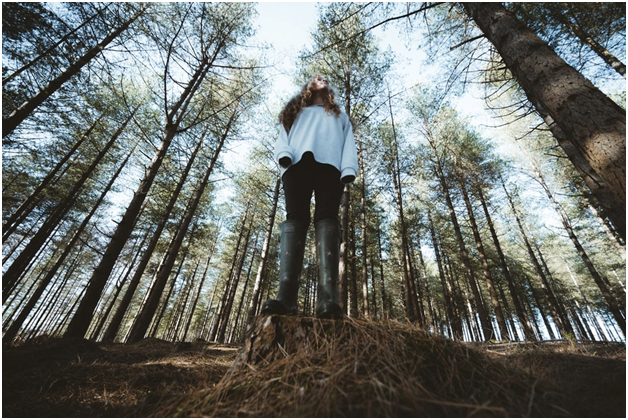
In a study, it was found that spending 120 minutes outside each week, which can be broken into small patches of time would bring in better results in the health and well-being of the people. Instead of gluing to the idiot box, just 30 minutes of outdoor time could lower blood pressure by almost 10% instantly. A stroll in the green pasture can be helpful in the restoration of psychological level, with the lowering of cortisol, improved concentration, and a feeling of a deeper sense of connection. It will help in lowering the stress level, reducing anxiety and depression, improvement in self-esteem, and a boost in confidence. Caring for nature such as gardening would encompass both cognitive and evolution mechanisms.
________________________________________________________________________
Read Also : The young ancient secret of BIOCHAR,
________________________________________________________________________
The trend of urbanization which is swallowing up natural areas and cutting people off from natural surroundings is typically used to explain the weakening human connection to nature. The rapid rise of TV as the most popular medium of entertainment, the appearance of video games, and the Internet have completely changed our lives. They have been claiming more leisure time since the late 1990s. It stands to reason that these technologies majorly substituted for nature as a source of recreation and entertainment.
The result is our avarice and indifference, which have led to low ethics and moral values, thus increasing crimes. When we are stuck at a desk or residing in small flats, a small addition of indoor plants, using furniture made out of wood, letting in as much sunlight as possible, and hanging pictures and artworks of natural places will change the aura of the place. We can dream of a kind and honest world only, if we adopt Nature, nurture moral values, and keep our ethos.
Tags: #climate, #environment, #getgreengetgrowing, #gngagritech, #greenstories, #Legacy, #life, #nature, #patience, #sensitivity, #socialization