
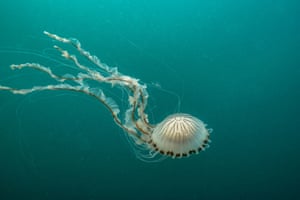
- A compass jellyfish, one of the most commonly spotted, recorded in a survey of marine wildlife of the UK coastline. Members of the public have reported a total of 1,315 jellyfish sightings to the Marine Conservation Society (MCS) for its annual report including a 2% increase in the man o’war. The MCS regularly records sightings of eight jellyfish species with the compass jellyfish making up 23% of sightings and the moon jellyfish also accounting for 23% of reports, seen in smacks – groups of jellyfish – of more than 100Photograph: The Marine Conservation Society/Peter Bardsley/PAFacebookTwitter

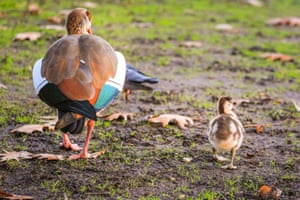
- A family of Egyptian geese go for a walk in St James’s Park, London. The family have three small but healthy looking goslings very late in the year due to the warm temperatures throughout OctoberPhotograph: Imageplotter/Alamy Live NewsFacebookTwitter
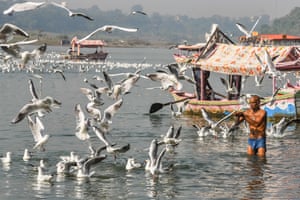
- A man offers prayers as migratory Siberian seagulls fly over the river Narmada on a wintry morning in Jabalpur, IndiaPhotograph: Uma Shankar Mishra/AFP/Getty ImagesFacebookTwitter
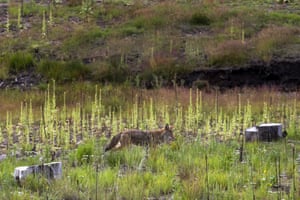
- A coyote strolls through the Santa Clara Canyon in northern New Mexico, US. The canyon, part of Santa Clara Pueblo, remains closed to the public while its habitat is restored after devastating wildfires and flash floodsPhotograph: Andres Leighton/APFacebookTwitter
________________________________________________________________________
Read Also : Siberian Wildfires Swell Amid Historic Heatwave
________________________________________________________________________
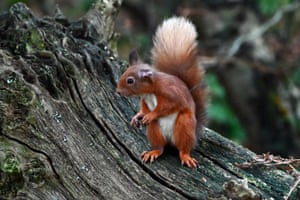
- A red squirrel looks around cautiously on a fallen tree branch, at RSPB Loch Leven nature reserve in Kinross, ScotlandPhotograph: Ken Jack/Getty ImagesFacebookTwitter
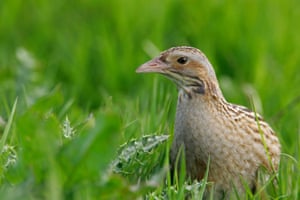
- A corncrake in Scotland. The falling number of corncrakes in Scotland is worrying, the Royal Society for the Protection of Birds has said. RSPB Scotland’s annual survey of corncrakes found there were 824 calling males in 2022, compared with
- 850 in 2021Photograph: Andy Hay/RSPB Images/PAFacebookTwitter
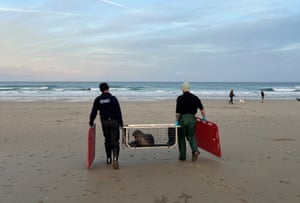
- A grey seal pup is released back into the wild after it was found injured and starving on a beach, with a heart drawn around him in the sand. The pup, named Curry, was taken to the Cornish Seal Sanctuary after being rescued from the beach in west Cornwall last month. Volunteers from British Divers Marine Life Rescue were initially called to assess him on 10 September and he was then transferred into the care of the Cornish Seal SanctuaryPhotograph: Cornish Seal Sanctuary/PAFacebookTwitter
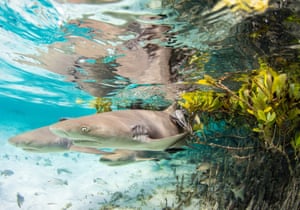
- Mangroves & Underwater at the Edge, a runner up in the year’s best mangrove photographs. Photographer Jillian E Morris says: ‘If the mangroves disappear, so does the wildlife that depend on it. Both mangroves and sharks are right on the edge and need protection. I wanted to show a different side of these juvenile lemon sharks; a social side, a more vulnerable side, and the delicate balance of this system.’Photograph: Jillian E Morris/Mangrove Photographer of the YearFacebookTwitter
- Advertisement
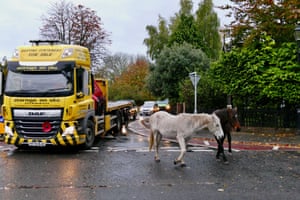
- New Forest ponies in the village of Brockenhurst, UK cause holdups with the morning traffic in the rain. Feeding the wildlife could mean a fine of up to £1,000 as New Forest district council seeks to crack down and the feeding and petting of ponies, horses, mules and donkeys becomes a criminal offencePhotograph: Geoffrey Swaine/Rex/ShutterstockFacebookTwitter
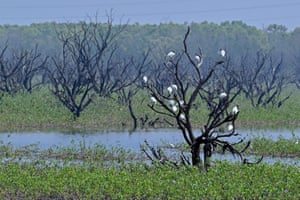
- Black-headed ibis perch on a tree in a lake on the outskirts of Bengaluru, IndiaPhotograph: Manjunath Kiran/AFP/Getty ImagesFacebookTwitter
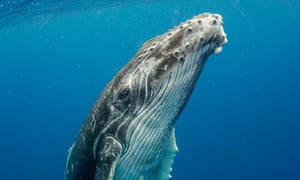
- A humpback whale calf as it slowly ascends to the surface to breath in Tonga. A study has found that whales ingest millions of microplastic particles a day, study findsPhotograph: By Wildestanimal/Getty ImagesFacebookTwitter
________________________________________________________________________
Read Also : Climate Change, Cost Factor: Why it Takes Months to Subdue Some Wildfires
________________________________________________________________________
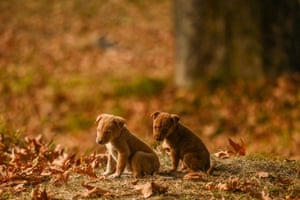
- Puppies sit near maple trees at Nishat Garden in Srinagar, IndiaPhotograph: Tauseef Mustafa/AFP/Getty ImagesFacebookTwitter
- Advertisementhttps://db9080c4f0ee2cefa06641c686c8029d.safeframe.googlesyndication.com/safeframe/1-0-39/html/container.html
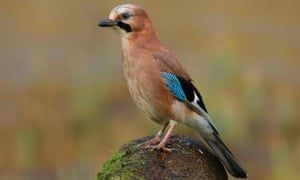
- A jay (Garrulus glandarius) perched in the Welsh countryside, UK. Researchers have found that jays shun an immediate reward for a tastier, but delayed, treatPhotograph: Helen Davies/AlamyFacebookTwitter
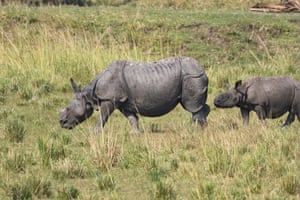
- One horn rhino seen grazing inside Burapahar Range, Kaziranga national park, Nagaon district of Assam, India. Rhinoceros horns have become shorter over the last century, researchers have foundPhotograph: Anuwar Hazarika/NurPhoto/Rex/ShutterstockFacebookTwitter
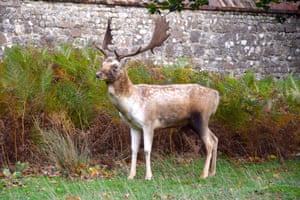
- A fallow deer roams freely in the 1,000 acre of Knole Park in Kent, UK, on a blustery autumnal dayPhotograph: Fraser Gray/Rex/ShutterstockFacebookTwitter
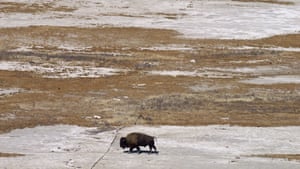
- A bison walks along the receding edge of the Great Salt Lake on Antelope Island, Utah. This year, about 750 bison were pushed into corrals during the Bison roundup. The animals are rounded up each fall so they can receive health checkups and vaccinations and be affixed with a small external computer chip that stores health information. They are then released back on the island or sold at a public auction to keep the herd at a manageable level of about 500Photograph: Rick Bowmer/APFacebookTwitter
- Advertisement
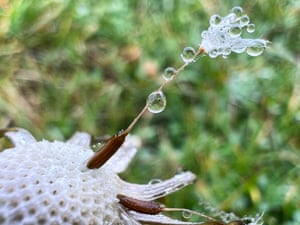
- Water droplets on the seeds of a dandelion flower during a wet and foggy day in Toronto, Ontario, CanadaPhotograph: Creative Touch Imaging Ltd/NurPhoto/Rex/ShutterstockFacebookTwitter
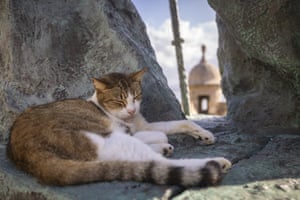
- A stray cat rests on a statue in Old San Juan, Puerto Rico. Cats have long walked through the cobblestone streets of Puerto Rico’s historical district, stopping for the occasional pat on the head as delighted tourists and residents snap pictures and feed them, but officials say their population has grown so much that the US National Park Service is seeking to implement a free-ranging cat management plan that considers options including removing the animalsPhotograph: Alejandro Granadillo/APFacebookTwitter
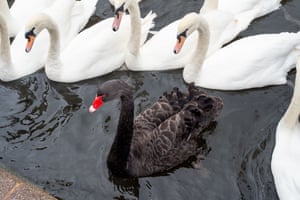
- Swans, geese, ducks, gulls and pigeons on and by the River Thames in Windsor, UK, hoping to get fed by passers by. Thankfully the current outbreak of avian influenza has not reached Windsor yet. The numbers of swans on the Thames in Windsor is down as sadly a number of the swans and cygnets from last year died earlier this year following the previous bird flu outbreakPhotograph: Maureen McLean/Rex/ShutterstockFacebookTwitter
________________________________________________________________________
Read Also : How Goats Are Preventing Wildfires in California
________________________________________________________________________
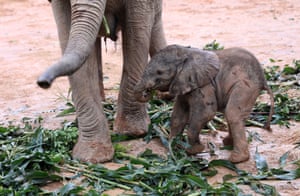
- An African elephant calf eats at the Chimelong Conservation Base of World Endangered Wild Plants and Animals in Qingyuan, ChinaPhotograph: Xinhua/Rex/ShutterstockFacebookTwitter
- Advertisementhttps://db9080c4f0ee2cefa06641c686c8029d.safeframe.googlesyndication.com/safeframe/1-0-39/html/container.html
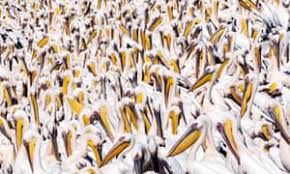
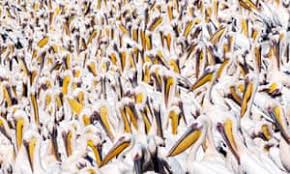
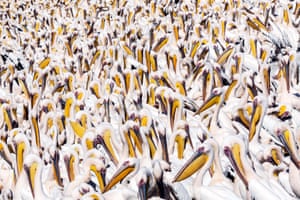
- A squadron of migrating great white pelicans on their journey south gather at a water reservoir in Mishmar HaSharon, IsraelPhotograph: Ronen Zvulun/ReutersFacebookTwitter
NOTE – This article was originally published in theguardian and can be viewed here
Tags: # jellyfish, #animals, #birds, #climate, #environment, #fish, #getgreengetgrowing, #gngagritech, #greenstories, #nature, #wildlife






You actually make it seem really easy together with your presentation but I in finding this matter to be really one thing that I think I’d by no means understand. It seems too complex and very broad for me. I’m taking a look forward on your next publish, I?¦ll try to get the cling of it!