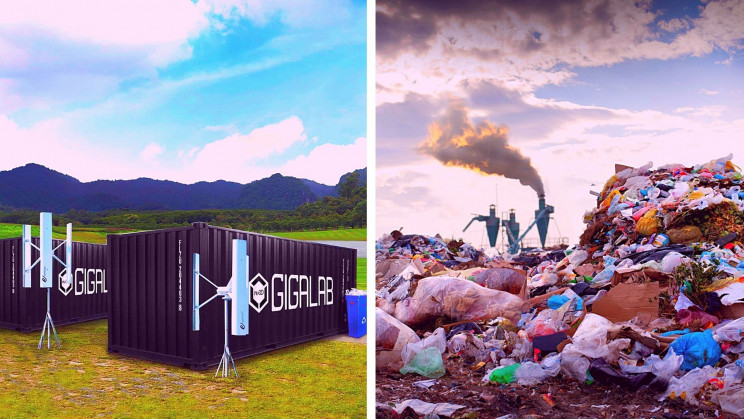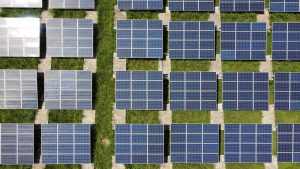
The big bright gaseous burning ball, or the sun as we know it, is the primary source of energy for all the creatures on this planet. But apart from the heat and sunlight, is there any other way of harnessing power from the sun?(SOLAR)
________________________________________________________________________
“Buy Organic Products Online at best prices at http://www.getgreen.co.in “.
________________________________________________________________________
Photovoltaics Cells and Solar Energy
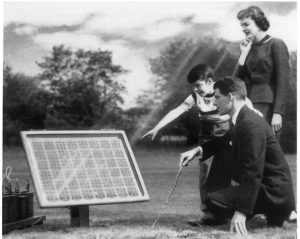
Photo: https://highnoonsolar.com/how-long-do-solar-panel-last/
For a very long time, the answer to this question was simply a no, but in the late 1700s and 1800s, researchers and scientists were making some progress. They were successful in using the sun’s energy to power ovens for long voyages. And in some places, it was being harnessed to run solar-powered steamboats.
But the first crucial step towards harnessing the sun’s energy to produce electricity was back in 1873 when Willoughby Smith discovered photoconductive properties of selenium. After this, in 1876, William Grylls Adam and Richard Evans Day observed that selenium creates electricity when exposed to sunlight. And a few years later, in 1883, Charles Fritts produced the first solar cells using selenium wafers.
________________________________________________________________________
Read Also : Dams and their impact on the environment
________________________________________________________________________
However, the photovoltaic cells that we use today are made of silicon. Therefore, the real credit for inventing the modern-day photovoltaic cell is given to Daryl Chapin, Calvin Fuller, and Gerald Pearson. They built the first photovoltaic silicon cell at the Bell Labs back in 1954.
Why Solar?

Traditionally, we have been using fossil fuels like petroleum, natural gas, and coal as a primary source for generating electricity. But the issue with fossil fuels is that they are non-renewable, rapidly depleting, and unevenly distributed over the surface of others. Other than that, the burning of fossil fuels to produce electricity also emits several greenhouse gases and causes widespread environmental pollution.
Lately, there has been an increase in the use of solar power as a source of energy to produce electricity. The main reason behind it is that solar energy is renewable and promotes sustainable development
Apart from that, other benefits of using solar energy are:
- Reduces your electricity bill
For people who already have a grid connection for electricity, using solar panels for electricity can help reduce the high cost of electricity bills. Moreover, one can even earn some money by exporting back the excess electricity generated in case their panel is connected to the grid.
- Low cost of setting up and maintenance
Once set up, these solar panels do not require a lot of maintenance. Just a periodic cleaning of the panels a couple of times a year is sufficient. Thus, the cost of maintenance is low.
- Easily Accessible
There are still a lot of places in our country where there is no grid connection, mostly due to territorial. But there is hardly any place where there is human settlement but no sunlight. Thus, solar energy helps provide electricity in such areas. So, it is comparatively more accessible.
But are there any Disadvantages?
Just like every rose has its thorn, solar panels also come with their own set of disadvantages.
- High Cost of Setting up
Although once set up, there is hardly any expenditure on the maintenance of solar panels, but the initial cost of setting up solar panels is very high. It includes the cost of solar panels, inverter, batteries, wiring as well as the cost of installation.
- Intermittent Nature
Solar panels can only absorb energy to be converted into electricity during the day time making them intermittent. Also, they require a specific amount of sunlight to absorb it properly. So, in places that experience long days of heavy rainfall and cloudy weather, it is not a smart alternative.
- Pollution
A lot of people applaud solar energy for being ecofriendly, but in reality, it isn’t as eco-friendly as we think it is. Although solar panels help reduce carbon emissions by reducing our dependency on traditional fossil fuel-based power plants but, these solar panels are usually disposed of and add to the already existing problem of electric waste after they serve their purpose.
________________________________________________________________________
Read Also : Small, smart, community-owned solar farm on cards for NSW High Country
________________________________________________________________________
In Conclusion
In the article above, we have discussed both the advantages as well as the disadvantages of solar panels. Now, it is up to us to analyze our priorities are and what the need of the hour is. As we mentioned that solar panels have a high cost of setting up but at the same time, they are very cheap to maintain and also can help one earn revenue in some cases. So, the high cost of setting up is an investment in away.
Also, the issue of electric waste due to solar panels can be resolved by introducing proper recycling programs focused specifically on recycling solar panels and other equipment related to it. Also, we can generate awareness amongst the people and guide to on how to properly dispose of these panels.
Tags: #cleanenergy, #energy, #getgreengetgrowing, #gngagritech, #gogreen, #greenenergy, #greenstories, #hwasa, #kpop, #mamamoo, #moonbyul, #renewableenergy, #solar, #solarenergy, #solarpanels, #solarpower, #solarsystem, #wheein