YOGA AND MENTAL HEALTH

https://www.yogiapproved.com/yoga/funny-yoga-memes/
That sound about right!
Yoga’s importance has grown significantly in the aftermath of the Covid-19 pandemic, which has impacted the lives and livelihoods of millions of people worldwide.
Maintaining a consistent fitness regime is tough at the best of circumstances, and the COVID-19 pandemic has made it considerably more difficult. The pandemic has posed unprecedented difficulties to the public health system not just in India, but across the world. With social unrest, people are staying at home more than normal, glued to their screens, navigating a new social distance routine and adjusting to the new reality that has been forced upon us.
The importance of mental health at this period cannot be overstated as Yoga is ideal during this quarantine period, just grab your mat and and you are ready to kickstart it.
Yoga is a practice that links our mind, body, and spirit while also increasing mental clarity.. It is an excellent technique for reducing stress and improving cognitive skills, which helps to keep a variety of health problems at check.
________________________________________________________________________
“Buy Organic Products Online at best prices at http://www.getgreen.co.in “.
________________________________________________________________________
Here’s a list of top 10 full body yoga poses to help you begin with their mental health benefits
TADAASANA ( Mountain pose )

Tadasana also known as the Mountain Pose, is appropriate for people of all ages and is considered the basis of all standing yoga postures. This position involves the use of the entire body thereby calming the mind. It is generally one among the first positions taught in a yoga session. While performing the posture, you must feel balanced, stable, and connected to the earth as the energy travels down the body and allows the free passage of prana in the spine.
It enhances posture, expands the lungs, and lengthens the spine while Strengthening the thighs, glutes, and leg muscles gradually. It also helps to improve alertness and focus.
HOW TO DO TADAASANA:
- Stand straight with your feet few inches apart
- Raise both arms while gently inhaling.
- Keep your arms up by interlocking your fingers and keeping your palms facing upwards.
- Come on your toes while simultaneously lifting your heels.
- Toes to fingertips, feel the strain as you stretch.
- Try to hold this posture for as long as you can while breathing slowly and deeply.
- Come back to your previous position and breathe deeply (exhale).
BENEFITS OF TADAASANA
- Flat feet are reduced, and sciatica is relieved.
UTTANAASANA (Standing forward bend)
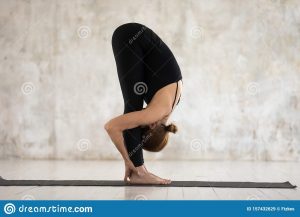
Forward Bending help your lungs flow naturally while you breathe. As you breathe, your lungs naturally rotate as a result of the rear body expansion inherent in any forward bending position.
With our arms behind your backs, it will release your shoulders of whatever stress they may have been holding on to. As your head is below your heart , making your blood to rush to the brain instead of the feet, providing your cells with an instant burst of oxygen.
HOW TO DO UTTANAASANA
- Take a deep breath and exhale forward, leaning forward at the hips. Bend your knees enough so that your hands are flat on the floor and your head is placed against your knees, and then stand up straight and tall.
- As you draw the head down and in and press the hips up, you’ll feel the spine stretch in opposite directions. Legs should be straightened in order to increase the amount of stretch in backs of the legs.
- Breathe in and out for 4-8 breaths, lowering the abdomen into the knees on the inhale.
- To release, bend the knees while maintaining your back straight, inhale your arms out to the sides, and exhale your arms and body back into Mountain position.
BALASANA (Child’s pose)

Child’s Pose stretches the hips, thighs, and ankles while also relieving tension and weariness. It gradually relaxes the muscles in the front of the body while passively extending the muscles in the rear of the chest.
- This resting stance focuses, relaxes, and soothes the brain, making it a beneficial posture for stress relief. It can also assist reduce back and neck discomfort when performed with the head and body supported.
HOW TO DO BALASANA
- Sit down and take a seat on your knees.
- Lean forward, hips on heels, and place your forehead on the floor. Place your arms close to your legs, palms facing up.
- Slowly and thoroughly inhale and exhale for at least eight breaths.
________________________________________________________________________
Read Also : FARM GOODS TO ROOTS OF NATION – FARMING MADE EASY
________________________________________________________________________
BITILAASANA ( Cat Cow pose)
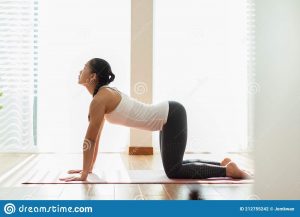
It soothes and relaxes the lower back while simultaneously massaging the spine and relieving tension.
- Cat – Starting from a standing position on all fours, curve your back toward the ceiling and pull your navel up towards your spine while exhaling The spine and head should be in a neutral posture.
- Cow – Inhale and reach the pelvis up towards the ceiling, arching the spine and letting the belly sink down.
- For 4-8 breaths, breathe and hold in between cat tilt and dog tilt, breathing into the dog side and expelling into the cat side.
PASCHIMOTTASANA (Seated forward bend)
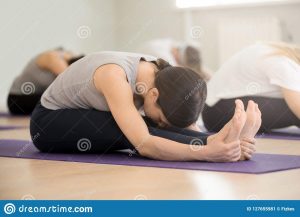
Stress drains us of all our energy reserves. It’s impossible to function when our batteries are empty. Anything may drive us over the brink. In this phase, the neck, head, and shoulders are likely to be tight. This technique involves noticing where tension or fear manifests in the body and focusing our attention on that area while breathing deeply into it.
HOW TO DO PASCHIMOTTASANA
- Sit up straight with your legs outstretched, then bend your left leg and bring the sole of your foot to the upper inside of your right thigh. Your left knee should be flat on the ground. Inhale while placing both palms on each side of the right leg.
- Exhale while folding forward as you turn towards the outstretched leg. Hold for 5-6 breaths before repeating the posture on the opposite side.
Setu Bandhasana (Bridge Pose)
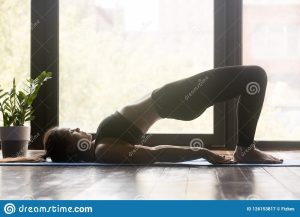
It aids in the strengthening of the back muscles. Provides quick relief for a sore back, as well as a nice stretch for the chest, neck, and spine.
HOW TO DO SETU BANDHASANA –
- Lay on your back to begin.
- Fold your knees and maintain your toes hip-distance apart on the floor, 10-12 inches from your pelvis, with your knees and ankles in a straight line on the floor
- Hands facing down, keep your arms at your sides, palms facing down.
- With each breath, carefully elevate the backs of your lower back, middle back, and upper back; softly roll in the shoulders; and touch the chest to the chin without dropping the chin. Your lower body will tighten in this posture as it contracts your abs. There is a straight line between the thighs and the floor.
- Continue to breathe slowly
- Hold the position for a minute or two before gently releasing it.
ARDHMATSYENDRA (SEATED SIDE TWIST)

- Sit up straight with your legs outstretched.
- Inhale and bring your knees up to your chest, keeping both feet on the floor.
- Drop your left leg, placing the foot on the right buttock.
- Place your right leg over your left leg, knee toward the ceiling, right ankle by the left knee.
- Bring the right leg closer to the body. Do this to the extent of your body’s comfort.
- Inhale, then exhale as you rotate to the right, bringing the left elbow to the outside of the right knee.
- Hold the position for 30 seconds, taking calm, deep breaths. Rep on the other side.
ANULOM VILOM (BREATHING EXERCISES )

Ever felt the sudden Chill simply by deep breathe, after a hectic day at work?
You probably don’t give much thought to your breath. I t’s always there in the background, by default. It turns out, that paying greater attention to your breathing might have a significant influence on your level of anxiety.
Your breathing becomes uneven and shallow when you’re worried or anxious.
________________________________________________________________________
Read Also : Smart Farming: The Future of Agriculture
________________________________________________________________________
Deep breathing is a technique that allows more air to enter your body and can help soothe your nerves, lowering tension and anxiety.
It can also help you increase your attention span.
- Close your eyes and sit comfortable.
- Pay attention to your breathing. Concentrate on breathing from your stomach, pushing your stomach out with each inhalation.
- Take deeper breaths, counting to three with each inhalation and release. Continue to the same for better results
After a time, you will realize that your body is becoming more relaxed.
SIDE STRETCH

When doing side bends, you’re stretching your abdominal muscles and your digestive system. This helps to regulate digestion, evacuation, and metabolism and best for rib support, Stretching lengthens both your muscles and the connective tissue that surround them. This relieves tense muscles and enhances total body mobility.
HOW TO SIDE STRETCH
- Sit up straight with your legs extended.
- Raised both arms above your head, fingers interlocked, with the index fingers extended and pointing to the ceiling
- While inhaling, lean your shoulders to the right while exhaling. Lengthen from your left hips to your ribs, starting at the left hip. Right-side the room using your left arm.
- Retain your focus. You may feel a little trembling in your body. Try to stay focused and take deep breaths, but if it becomes too much, you may back off.
- Get back to the original position. Do the same for the other side.
SAVASANA (Corpse Pose)
Haha Shavasana is for lazy lads, clearly.

But on a serious note, Although it appears to be the easiest asana, Savasana (Corpse Pose) has been labeled as the most challenging one. Indeed, many yoga students who can comfortably balance, bend, and twist throughout the remainder of the class struggle with just lying on the floor. The reason for this is that relaxing is more difficult than it appears.
The position creates the environment for you to gradually achieve a completely relaxed state, which is extremely relaxing in and of itself and may also serve as a starting point for meditation.
HOW TO DO SAVASANA
- Legs straight and heels slightly apart, flop onto your back and relax. Get comfortable and place both arms beside your body so that your palms are facing up and hold them there.
- Close your eyes, and take deep breaths.