
As the climate warms, animals often shift their seasonal schedules forward. Birds nest earlier, frogs breed sooner, and spring arrives ahead of the dates it once kept.
But a decade of observations from Iran’s wild mountain sheep tells a more complicated story.
Across six populations, breeding timing remained remarkably stable through warm years and cool ones alike. Only a single herd showed signs of moving earlier.
Sheep of the mountains
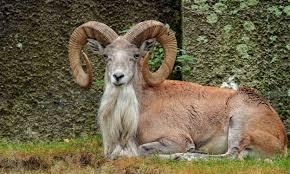
The animal here is the urial, the largest wild sheep in Iran. Males grow long horns that spiral forward and a chest bib of white fur. The herds roam dry slopes where grazing comes and goes.
Conservationists rate the species as vulnerable, its numbers down at least a third in three generations from hunting, livestock, and lost land.
They are also common prey for two rare cats, the Asiatic cheetah and the Persian leopard.
The study was led by Fereshteh Khaleghdadi, a researcher at Shahid Beheshti University (SBU) in Tehran.
Her team asked whether the urial’s calendar had moved as Iran warmed, using over a decade of records from six protected areas.
The breeding calendar
Wild sheep do not breed year-round. Day length sets the broad breeding season, a built-in cue that reads the close of autumn.
Urials mate in mid-autumn and drop one or two lambs half a year later. Within that window the dates still drift, and food is likely the reason.
A mother needs to be in good condition to conceive and nurse, and that condition often depends on the quality of available forage.
Warm, dry summers tend to produce richer forage, and better-fed females may breed sooner. The worry under climate change is a mismatch.
Lambs born ahead of or behind the burst of spring growth face a leaner start, and fewer survive. A paper on red deer found heat alone can slow how fast calves grow.
________________________________________________________________________
Six parks, one species
The six parks run from the warm south of Iran to the cooler northeast, across a wide range of latitude and elevation.
Rangers had patrolled the same routes for years, recording observations on standard forms. The same trails were used year after year. Pinning the dates down meant watching behavior.
The mating season showed itself in fights between mature males, horns clashing as they sorted out who would gather a harem. Those first sustained bouts marked the season’s start.
Births were harder to capture, since mothers tend to hide their newborns in cover.
So the first sighting of a mother with a lamb marked the start of lambing. That cue lags the real birth, so the dates track the herd, not one animal.
Insights from the data
The clearest pattern ran north to south. Sheep in the southernmost park, a reserve called Khabr, bred and gave birth first.
The cooler northern herds ran weeks behind. None of this surprised biologists, and a study of reindeer had already linked winter and spring weather to the timing of births.
Each year’s weather refined the timing. How far north a herd lived counted most, along with how hot its summer ran and how wet its autumn turned.
Warmer summers came with earlier mating. A wet autumn showed the reverse. Lambing answered to a different master.
Most of the variation in birth dates came down to which park a herd lived in, its local mix of terrain and plants, more than any one weather figure. Warm Januaries nudged births slightly later.
One clock moving
Here the long record paid off. Over more than a decade, the team could ask not just where the sheep bred early, but whether any herd bred earlier than it once had.
For five populations, the answer was no. Their dates bounced around year to year, the way wild populations always do, with no steady march toward spring.
The weather told the same story, summer heat and autumn rain wobbling each year but with no clear long-term trend.
One herd broke the pattern. In Tandoureh National Park, in Iran’s northeast, both mating and lambing have crept steadily earlier over the years.
It was a clear forward march in a place where no other herd showed one. No one had recorded such an advance in urial before, and the study cannot yet say why.
What could change
The work draws a clean line between place, climate, and the urial’s calendar. Where it is warmer and farther south, sheep breed earlier, and a warm, dry summer pulls the date forward.
The study provides one of the first measurements of that relationship in a species that has rarely been tracked this way. The same connection carries a warning.
If summers keep warming, the timing now sorted out by latitude could start to move within a single place, and Tandoureh may show it first.
The danger is a widening gap between birth and the peak period of spring plant growth.
Looking to the future
For the rangers who guard these sheep, breeding dates can now become part of monitoring efforts across Iran’s parks.
The goal is to flag any herd that drifts early. Other research there has caught large mammals climbing uphill as the lowlands warm.
For an animal already pressured by hunting, knowing when its young arrive could help determine whether populations persist.
The study is published in PLOS ONE.
NOTE – This article was originally published in Earth and can be viewed here