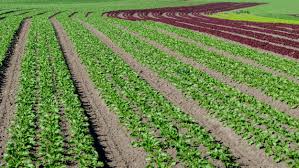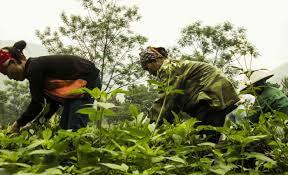

Fly over northern China in January and the farmland glitters. That sheen is China greenhouse farming – plastic over low tunnels where tomatoes and cucumbers grow while the world outside freezes.(vegetables)
Nobody had measured what all that plastic actually delivers. A research team finally counted, and the totals sit oddly beside how little ground these farms occupy.
Inside China’s greenhouse farming
Jinlong Dong, a soil scientist at the Chinese Academy of Sciences (CAS), led the first national field survey of greenhouse farming. It found these farms cover just 1.4% of China’s arable land.
That sliver grows more than a third of the country’s vegetables. The crops earn nearly $170 billion a year, more than China’s corn and wheat combined. That makes them a pillar of food security.
No other country comes close. One satellite study put China’s share of global greenhouse area above 80%, or about 4.4 million acres (1.8 million hectares). Yields inside run up to six times higher than open fields.
Seventeen ways to farm
Building that picture took legwork. Dong’s team interviewed growers at 246 smallholder farms across 16 provinces. They also pulled over 1,200 soil samples from greenhouses and the open fields next door.
The data revealed 17 distinct farming systems. Each blends the same five moves: tuning greenhouse design to local climate, picking crops the region can sell, squeezing extra harvests from each plot, planting soils nobody else wants, and managing salt to keep the ground usable.
One system in Liaoning, a cold northeastern province, shows how the pieces fit. Growers raise tomatoes and peppers through hard winters. Each plot takes over 100 tons (91 metric tons) of manure a year, and the farms post the survey’s top profits.
________________________________________________________________________
Built for the climate
Winters in Shenyang, Liaoning’s capital, can drop to minus 4°F (minus 20°C). Solar greenhouses ride it out with no furnace at all.
Thick walls of packed earth soak up the daytime sun and release it overnight. That holds interiors 18 to 45°F (10 to 25°C) warmer than the air outside.
Dry northern air does the rest. Low humidity holds back fungal disease and many pests. Growers here spend about half the national average on pesticides.
Rainy southern provinces flip the design. Open-sided shelters block downpours over 40 inches (1,000 millimeters) a year that crack ripening fruit and spread disease.
None of it is high-tech, which keeps costs within reach of ordinary families.
Farming the leftover land
Greenhouses also rescue ground other farming gives up on. Fruit trees climb mountain slopes, salt-tolerant orchards reclaim saline soil near Dali in Yunnan, and sandy soils too poor for grain grow perfect radishes.
Inside the structures, farmers squeeze time as hard as they squeeze space. Intercropping pairs strawberries with tomatoes, or watermelons with long beans, on a single plot.
Rotations slot cold-hardy cabbage into winter and heat-tolerant greens into summer gaps. Highland farms in Yunnan harvest leafy greens six to eight times a year, far above the national average of two and a half plantings.
Small farms, big output
A typical operation covers under 2 acres (0.8 hectares), and that smallness works. Experienced growers keep their plots compact on purpose, earning more per acre than their larger neighbors.
The edge comes from relentless pruning, constant pest checks, and quick fixes when something goes wrong.
A global assessment reached the same verdict, tying smaller farms to higher yields. China’s version also adds jobs. Labor-hungry greenhouses employ far more people per acre than grain farming.
Increasingly, those jobs go to older workers. The average greenhouse farmer is 53, often a tradesman who came home when city work dried up. The sector is now a safety net for aging rural labor.
Cracks in the model
Every farmer surveyed reported losing money to price swings in the past five years. Small operations cannot see demand coming. When thousands plant the same crop, prices collapse together.
Flooding ranks second, named by nearly half of growers and worst along the Yangtze River Basin. Cold snaps and dim winters strain another sixth, and climate change is intensifying both extremes.
The soil pays a steep price too. Compared with the open fields next door, plots under plastic tested saltier, more acidic, and far higher in nitrate left behind by fertilizer.
Growers fight back with manure and by stripping the covers each summer so rain can flush the salts.
________________________________________________________________________
Looking toward 2050
The team also modeled the sector’s future. Shifting production to sunnier, cooler western regions and expanding only the best systems could halve greenhouse land needs by 2050 – same supply, far less ground.
Employment would climb at the same time. It could rise 20% in the main relocation scenario, or 156% if incomes were spread evenly to support older workers. Until now, no field data existed to run such projections.
The picture is no longer guesswork. China grows a third of its vegetables on a tiny slice of farmland for a simple reason. Thousands of small farms have each adapted to local climate and soil, not one technology.
That gives governments something concrete to work with. Beijing can steer drainage money to flood-prone regions and build the price-trading platform farmers asked for.
Countries like Mexico, now expanding greenhouse agriculture, can borrow a tested playbook.
The study is published in the journal Communications Earth & Environment.
NOTE – This article was originally published in Earth and can be viewed here